
User Experience Design
UX Design is the process of creating meaningful interactions between users and products or services. It encompasses all aspects of the user’s experience, including technology, content, interaction, service, and aesthetics across all touchpoints.
The Design Thinking Process
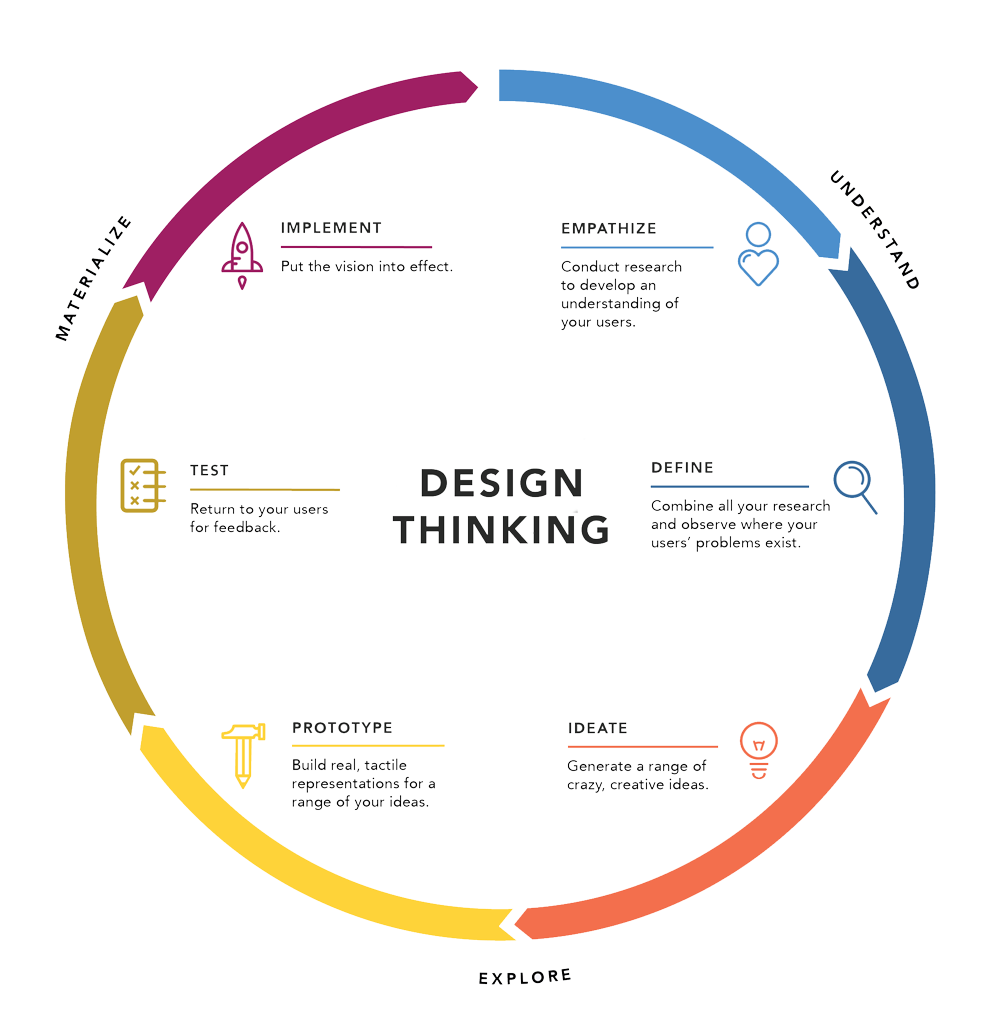
We implement UX Design through the Design Thinking methodology. Design Thinking is a user-centered approach to problem-solving that has become the industry standard for UX Design. It’s a structured yet flexible process that allows designers to deeply understand user needs, challenge assumptions, and redefine problems to create innovative solutions.
 Design Thinking is particularly effective because it:
- Puts the user at the center of the design process
- Encourages cross-functional collaboration
- Promotes iterative improvement based on real user feedback
- Balances user needs with business goals and technical feasibility
Our Design Thinking process consists of six key steps:
- Empathize: Understand the users and their needs
- Define: Identify pain points and clarify the problem
- Ideate: Generate potential solutions
- Prototype: Develop selected solutions into testable models
- Test: Evaluate prototypes with target users
- Implement: Hand off approved designs for development
This systematic approach ensures that every design decision is grounded in user needs and preferences, leading to products and services that truly resonate with the target audience.
Benefits for Businesses
Investing in UX Design yields substantial returns for businesses of all sizes. By prioritizing the user experience, companies can achieve both short-term gains and long-term success. UX Design is not just about creating visually appealing interfaces; it’s a strategic approach that aligns business objectives with user needs, resulting in measurable improvements across various aspects of the business.
The benefits of UX Design are wide-ranging and impactful:
Competitive Advantage
Well-executed UX Design provides a significant edge in the market. It leads to:
- Higher customer satisfaction
- Increased brand trust
- Improved sales
- Greater product adoption and usage
Cost Efficiency
Investing in UX Design early in the product development cycle is cost-effective:
- Prevents reliance on developers for design decisions
- Avoids the need for extensive post-launch revisions
- Reduces the cost of fixing issues (up to 100 times less expensive when addressed before coding)
Enhanced Product Quality
UX Design ensures that products:
- Meet user needs effectively
- Have intuitive and appealing interfaces
- Function as intended, reducing user frustration
Applicability
UX Design benefits companies of all sizes, from startups to large enterprises, across various industries. It’s particularly valuable for:
- Digital products (websites, apps, software)
- Physical products with digital interfaces
- Service-based businesses looking to improve customer interactions
By prioritizing UX Design, businesses can create products and services that truly resonate with their target audience, leading to long-term success and customer loyalty.
Related Articles
The UX Idea Engine: Why Better Design Begins with Better Thinking
When people think about great design, they often think about the finished product. A beautifully designed website, an intuitive mobile application, or a digital experience that seems to anticipate their...

The 10 Usability Heuristics: A Practical Guide to User Interface Design
The 10 usability heuristics developed by Jakob Nielsen and Rolf Molich of the Nielsen Norman Group (NNG) have become fundamental principles in the world of UX/UI design. These heuristics essentially serve as...

CRO and UX Design: The Perfect Digital Symphony
In the world of digital business, customer-centric strategies are critical to achieving success. Two such strategies that have proven to be highly effective are Conversion Rate Optimization (CRO) and User...